
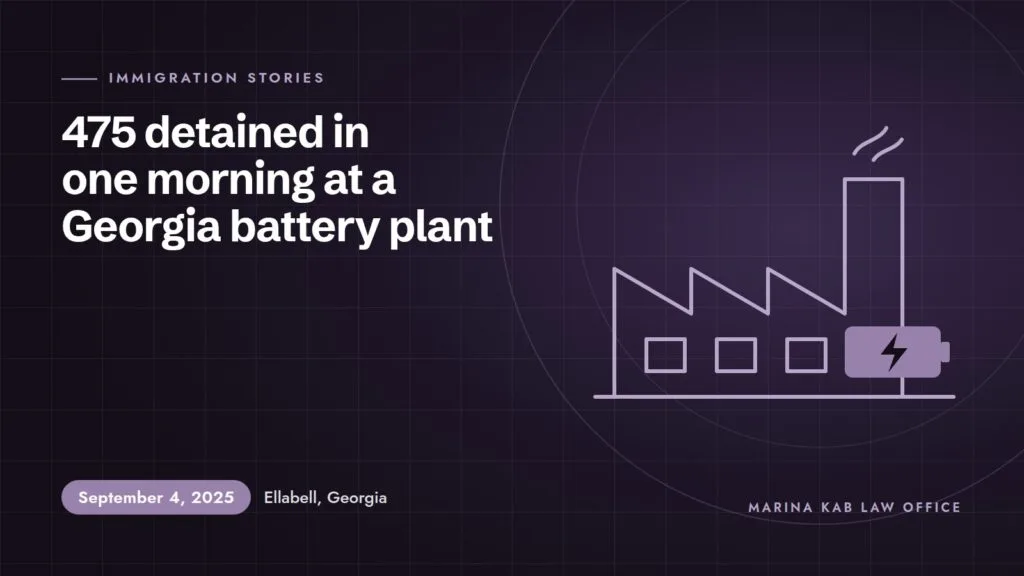
On September 4, 2025, federal agents led by Homeland Security Investigations, a branch of ICE, carried out an operation at the construction site of a Hyundai–LG electric vehicle battery plant in Ellabell, Georgia. They detained 475 people. The Department of Homeland Security called it the largest single-site operation in the agency’s history.
Who was detained
Of the 475 people, 317 were South Korean nationals. Forty-seven were employees of LG Energy Solution, and the rest worked for subcontractors. The detainees were taken to an ICE facility in Folkston, Georgia.
Timeline
- September 4, 2025: the raid takes place.
- September 7: the South Korean government announces an agreement for the workers’ release and says it will send a charter flight.
- September 10: the planned departure is delayed by a day.
- September 11: a Korean Air charter leaves Atlanta with 330 people on board: 316 South Koreans and 14 nationals of China, Japan and Indonesia. One South Korean chose to stay.
- September 12: the flight lands at Incheon.
- September 30: a U.S.–South Korea working group on visas meets for the first time in Washington.
- November 2025: some workers return and construction resumes.
The workers left under voluntary departure rather than deportation, a distinction that can matter for a person’s ability to return to the United States later.
What each side said
U.S. officials said agents were executing a court-authorized search warrant as part of an investigation into unlawful employment, and that the workers had either overstayed or were working outside the terms of their visas.
South Korea’s president called the raid “bewildering” and warned that it could discourage investment. Workers have alleged that they were shackled, had no interpreters and were pressured to sign documents.
The visa question at the center
Many of the workers had entered on B-1 business visitor visas or under the visa waiver program (ESTA). Whether the work they were doing was allowed under those categories is disputed. After the raid, the United States reaffirmed that B-1 visas and ESTA cover installing, servicing and repairing equipment.
Where things stand
On September 16, 2026, more than 300 of the workers filed administrative claims against the U.S. government under the Federal Tort Claims Act. That is a required first step before a lawsuit; no lawsuit had been filed at the time of the report.
Sources
This article is a summary of publicly reported events, prepared for general information. It is not legal advice and does not take a position on the matters described. Immigration rules and court rulings change often, and every situation is different. For advice about your own circumstances, please speak with a licensed immigration attorney.