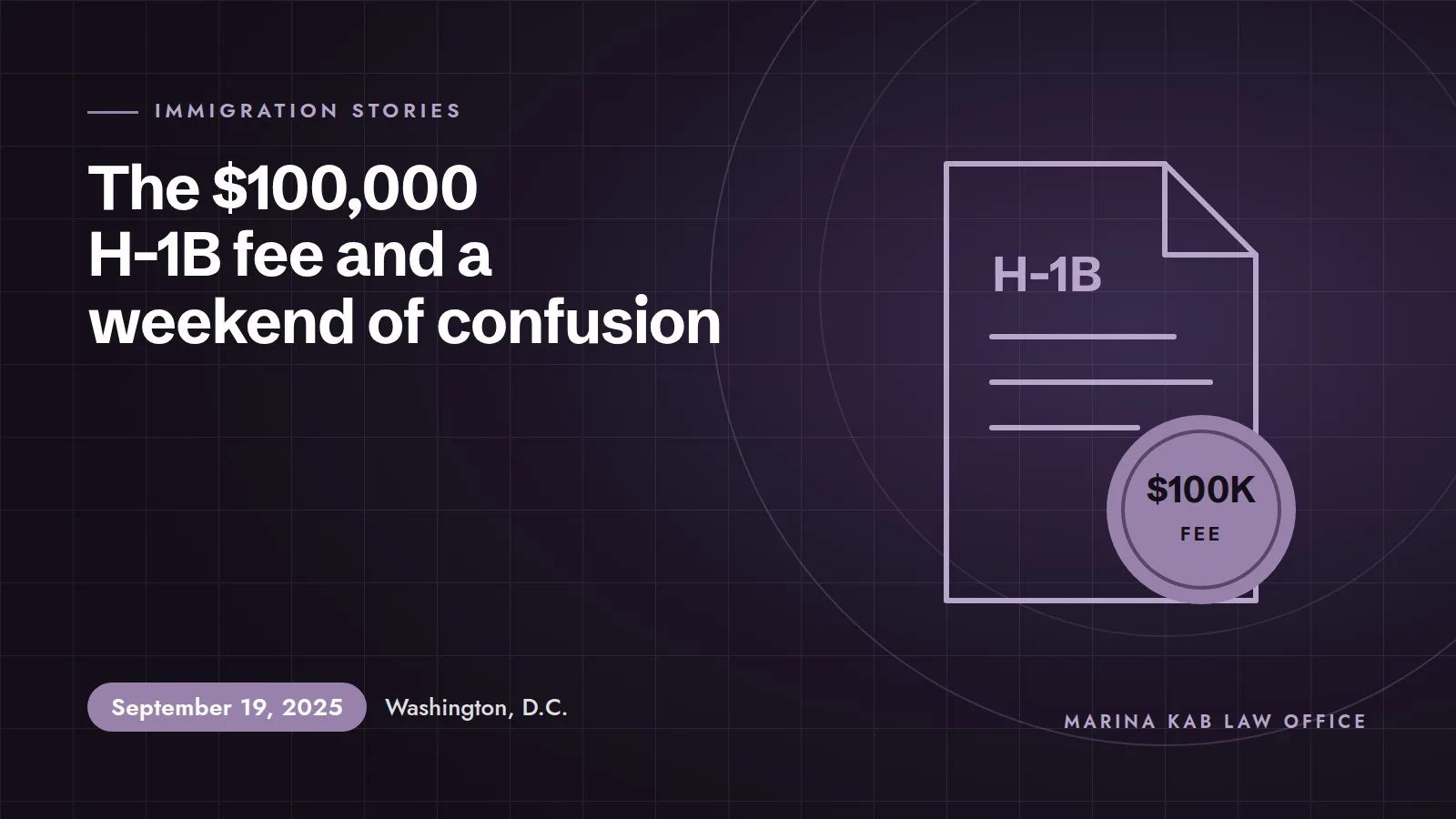

On Friday, September 19, 2025, President Trump signed a proclamation titled “Restriction on Entry of Certain Nonimmigrant Workers.” It imposed a $100,000 fee on new H-1B petitions, the visa category used by U.S. employers to hire foreign professionals in specialty occupations. It took effect less than two days later, at 12:01 a.m. Eastern time on Sunday, September 21.
A weekend of mixed messages
At the signing, Commerce Secretary Howard Lutnick said the fee would be charged every year. The next day, the White House press secretary said that was not the case: it was a one-time fee on new petitions and did not apply to current visa holders or to renewals.
In the hours between the two statements, news outlets reported that some employers advised H-1B workers who were abroad to return to the United States before the deadline.
What the proclamation says
- A $100,000 payment is required with each new H-1B petition filed after the effective time.
- It does not apply to visas that were already issued, petitions filed earlier, or renewals.
- The Department of Homeland Security may grant exceptions in the national interest.
- Agencies were also directed to begin rulemaking on prevailing wages and on selecting petitions by wage level.
What each side said
The administration says the H-1B program has been used to replace American workers and that the President has authority under the Immigration and Nationality Act to restrict the entry of certain foreign nationals.
Challengers, including business groups and about 20 states, say the payment is a tax or fee that only Congress can impose, and that it was adopted without the public rulemaking process the law requires.
In the courts
- A federal district court in Washington, D.C., upheld the fee in a case brought by the U.S. Chamber of Commerce. That decision is on appeal.
- June 8, 2026: a federal judge in Massachusetts set aside the policies implementing the fee.
- July 24, 2026: the First Circuit declined to let the government resume collecting the fee while it appeals.
- September 18, 2026: a second proclamation renewed the measure.
- September 30, 2026: a federal judge in the Northern District of California blocked the policies under both proclamations until proper rulemaking is completed.
Where things stand
As of early October 2026, courts are divided and appeals are pending. Because this litigation is moving quickly, the current status should be checked on the USCIS website before relying on any summary, including this one.
Sources
This article is a summary of publicly reported events, prepared for general information. It is not legal advice and does not take a position on the matters described. Immigration rules and court rulings change often, and every situation is different. For advice about your own circumstances, please speak with a licensed immigration attorney.